Published: 5 November 2026 · Last updated: 5 November 2026 · By: Energy Advice Helpline editorial team
About this page: Independent, plain-English guidance on a government scheme. We cite GOV.UK. We do not provide loans or financial advice.
The Warm Homes Loan Scheme is the government’s way of helping homeowners and private landlords spread the cost of home energy upgrades such as solar panels, home batteries and heat pumps. You borrow from a participating lender, not from the government. Official support is designed to bring the interest rate down compared with a normal loan.
This page summarises the consumer rules published on GOV.UK and in the DESNZ factsheet of 27 October 2026. Energy Advice Helpline is a helpline at heart. We’ve helped thousands of UK households with free, impartial advice on saving money, cutting energy bills, going green and getting the support they’re entitled to. We do not provide loans or financial advice. If you’re thinking about borrowing, use the official GOV.UK pages and speak to a participating lender.
Get free advice about upgrades and grants →
Latest news — what’s changed
5 November 2026 — this guide published. Energy Advice Helpline’s editorial team has pulled together the consumer rules for the Warm Homes Loan Scheme from GOV.UK, so households can see who can apply, what upgrades are covered and how the scheme sits alongside the Boiler Upgrade Scheme.
27 October 2026 — scheme opened to consumers. The Department for Energy Security and Net Zero published a Warm Homes Loan Scheme factsheet and GOV.UK launched the live consumer guide at gov.uk/warm-homes-loan-scheme, with separate pages for eligibility, how to apply and lenders. DESNZ said government support can cut rates by up to five percentage points versus regular loans, and named ten lenders at launch.
Earlier in 2026 — Warm Homes Plan. The loans sit inside the wider Warm Homes Plan (published January 2026, updated March 2026), which also covers the Boiler Upgrade Scheme and council support for lower-income homes.
We will add a dated line here whenever GOV.UK changes eligibility, loan caps, the lenders list or how the loan works with grants.
Get free advice and speak to an approved installer you can trust
Energy Advice Helpline is a not-for-profit Community Interest Company (CIC). Our advice is free, and we’ve helped thousands of UK households. Thinking about solar panels, a home battery or a heat pump? Tell us about your home and we’ll give you free, impartial advice and grant information. If you’d like, we’ll also introduce you to an approved installer from our network.
Why speak to one of our approved installers?
- We’re not-for-profit. We’re a Community Interest Company, so our job is to help households, not to push a sale.
- Approved and vetted. We only work with installers we’ve approved and vetted.
- Responsible installers. They’ll give you honest, clear information about what suits your home.
- MCS-certified. The Warm Homes Loan Scheme requires MCS-certified installers, and all of ours are.
- Grants checked first. We’ll help you check which grants, such as the Boiler Upgrade Scheme, could sit alongside a loan.
- Clear on how to apply. Your installer can explain how the scheme works with their quote and how to apply to a lender.
Energy Advice Helpline does not provide, arrange, approve or broker loans, and we don’t give financial advice. Any loan is between you and the lender.
What is the Warm Homes Loan Scheme?
The Warm Homes Loan Scheme sits inside the wider Warm Homes Plan. It is a government-supported loan, not a grant. The official overview is on GOV.UK’s Warm Homes Loan Scheme page.
In plain English:
- You apply to a lender that takes part in the scheme (a bank, credit union or specialist finance firm) — GOV.UK publishes the list of participating lenders.
- The loan product should say it is funded through the Warm Homes Loan Scheme.
- Government support is used to lower the interest rate. The DESNZ factsheet (27 October 2026) says by up to five percentage points compared with regular loans from banks or high street lenders. Some participating products are interest-free. Terms and rates still vary by lender.
- You remain responsible for repayments. After the work is done, it may be checked as part of an audit.
It is available across the whole UK — England, Scotland, Wales and Northern Ireland — according to GOV.UK.
Who can apply?
According to GOV.UK eligibility, you can apply if:
- you own the property (with or without a mortgage) — this includes private landlords as well as owner-occupiers
- the property is in the UK
- the property is residential, not commercial
There is no government income threshold. Each lender still runs its own credit and affordability checks, and may add its own rules.
Tenants cannot apply themselves. If you rent, speak to your landlord.
If you’re on a lower income, check grants first. You may get free upgrades through the Warm Homes: Local Grant (England) or other support — check what you could get, instead of borrowing.
Check which grants and support you could get
What upgrades can a Warm Homes loan cover?
You must use the loan for one or more eligible energy-saving improvements. GOV.UK lists:
- air source and ground source heat pumps
- solar photovoltaic (PV) panels
- battery storage systems
- heat network connections
- domestic wind turbines
- micro hydroelectric systems
You can apply for a loan that covers more than one improvement.

Maximum loan sizes (DESNZ factsheet, 27 October 2026)
Figures below are from the DESNZ Warm Homes Loan Scheme factsheet:
| Upgrade | Maximum loan supported |
|---|---|
| Solar panels | up to £15,000 |
| Electrical storage battery | up to £15,000 |
| Air-to-water heat pump | up to £20,000 |
| Air-to-air heat pump | up to £10,000 (once MCS certification is available) |
| Ground source heat pump | up to £35,000 |
| Biomass boiler | up to £20,000 |
| Heat network connection | up to £7,500 |
| Micro-renewable system | up to £20,000 |
Lenders choose which measures they support, so always check the product on the GOV.UK lenders list.
What it does not cover
Insulation, general home repairs, replacement windows, a like-for-like gas boiler, and a standalone EV chargepoint are not eligible loan measures under the scheme rules. (An EV chargepoint can only be included as part of a solar or battery installation.)
Who does the work?
You cannot do the work yourself. Installations (except heat network connections) must be carried out by an MCS-certified installer, as set out on GOV.UK.
Solar panels for your home · Home battery storage · Boiler Upgrade Scheme
How it works with the Boiler Upgrade Scheme and other grants
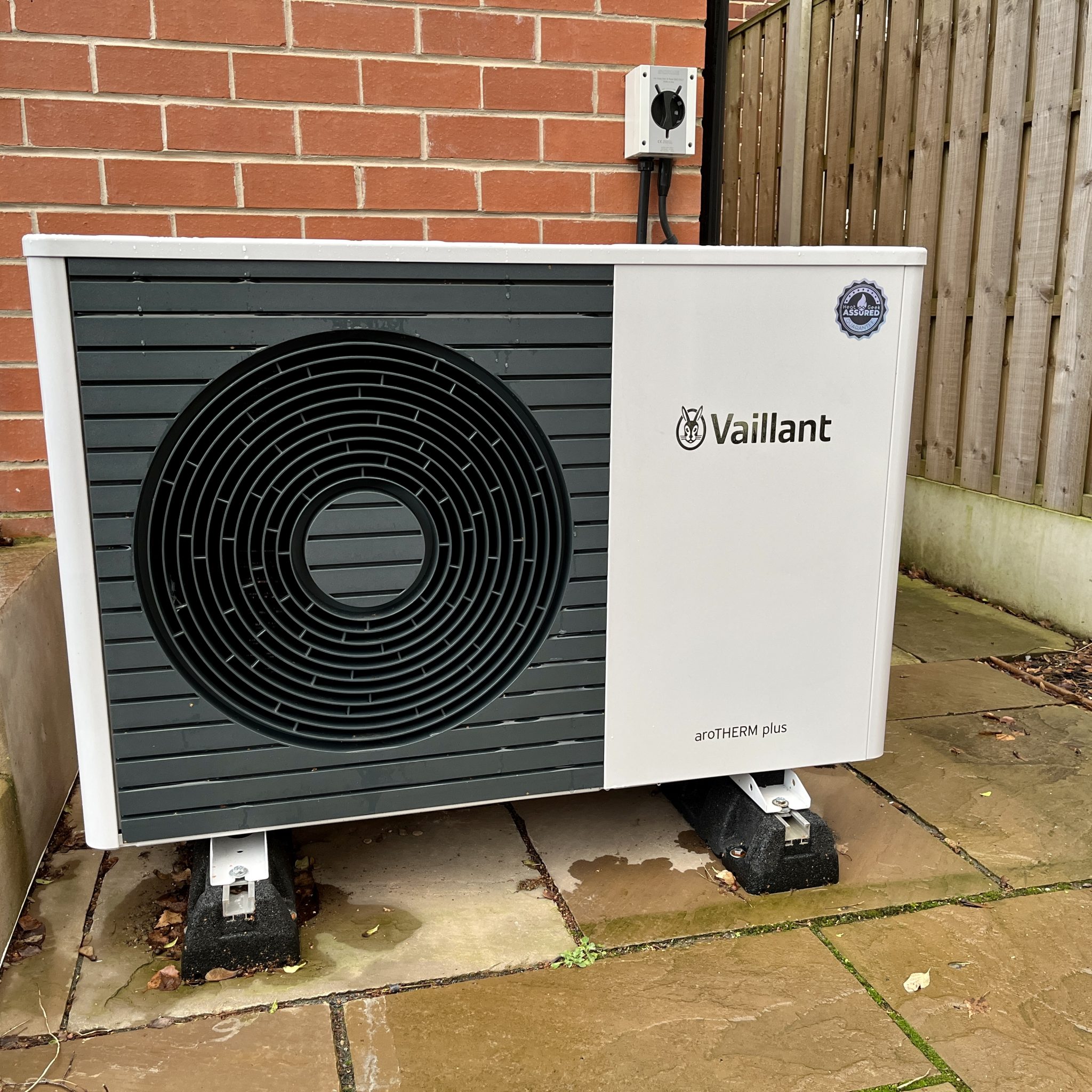
You may be able to use a Warm Homes loan alongside other funding, including:
- the Boiler Upgrade Scheme in England and Wales (currently £7,500 towards an air or ground source heat pump, with an extra £1,500 for many oil or LPG homes until 31 March 2027 — so up to £9,000 in those cases)
- Home Energy Scotland grants in Scotland
GOV.UK is clear on one rule: you cannot use a Warm Homes loan and other government funding to pay for the same improvement. In practice that usually means the grant covers part of a heat pump and the loan can cover the rest, or the loan covers solar or a battery that the grant does not.
How to apply
You do not apply to the government. GOV.UK’s how-to-apply page sets out three routes:
- Apply directly to a participating lender
- Apply through an installer or retailer when arranging finance for the work
- Apply through your mortgage provider
Before you apply:
- Work out which upgrades suit your home.
- Check whether a grant could help first (BUS, Local Grant, or Home Energy Scotland).
- Get installation quotes from MCS-certified installers.
- Compare loan products on the GOV.UK lenders list — look at the total amount repayable, the term, fees and whether the lender limits you to certain installers.
- Apply and pass the lender’s credit and affordability checks.
- Keep your paperwork (quote, finance agreement, invoice, proof of purchase and MCS certificate).
DESNZ named ten lenders at launch (27 October 2026). The live list on GOV.UK is the one to use, because more lenders are expected to join.
Not sure whether a grant, a loan or paying outright makes most sense for your home? Tell us a little about your situation and we’ll talk you through the options in plain English. We don’t arrange finance.
Warm Homes Plan loans vs grants: what’s the difference?
| Warm Homes Loan Scheme | Boiler Upgrade Scheme | Warm Homes: Local Grant | |
|---|---|---|---|
| What it is | Government-supported loan from a lender | Grant towards clean heat | Council-arranged free upgrades |
| Do you repay it? | Yes | No | No |
| Who it’s for | Property owners across the UK | Property owners in England and Wales | Lower-income privately owned homes in England |
| Means-tested? | No (lender credit checks apply) | No | Yes (income usually £36,000 or less, or other routes) |
| Typical upgrades | Solar, batteries, heat pumps and other listed renewables | Heat pumps, biomass, air-to-air, heat batteries | Insulation, heat pumps, smart controls, solar |
| Read more | Get free advice | Our Boiler Upgrade Scheme guide | Check your eligibility |
How Energy Advice Helpline can help
We offer free advice and grant information. People get in touch to:
- work out whether a heat pump, solar panels, a home battery, or solar plus battery suits their home
- understand the Boiler Upgrade Scheme and other grants still open
- get a plain-English view of how government loans fit alongside grants (without us arranging any finance)
- be introduced, if they wish, to our network of preferred, accredited installers
We’ve helped thousands of UK households. Our advice is free.
Energy Advice Helpline does not provide loans or financial advice. For borrowing decisions, use GOV.UK and the lender’s own information, and consider independent guidance such as MoneyHelper.
Get free advice and speak to an approved installer you can trust. We’re a not-for-profit CIC and we’ve helped thousands of UK households. Fill in the short form and one of our friendly team will be in touch with free, impartial advice and grant information. We can introduce you to an approved, vetted, MCS-certified installer from our network for solar, batteries or heat pumps; they can explain how to apply to a lender. We don’t arrange, approve or broker loans.
Warm Homes Loan Scheme FAQs
Is the Warm Homes Loan Scheme a grant?
No. It is a loan from a participating lender. You repay it. Grants such as the Boiler Upgrade Scheme and the Warm Homes: Local Grant are separate. See the GOV.UK overview.
Who is eligible for a Warm Homes Plan loan?
You must own a residential property in the UK. Private landlords can apply. Lenders run their own credit and affordability checks. There is no government income test — GOV.UK eligibility.
Can I use a Warm Homes loan for solar panels or a battery?
Yes. Solar PV and electrical battery storage are both eligible measures, each with a maximum loan size of £15,000 under the DESNZ factsheet.
Can I combine a loan with the Boiler Upgrade Scheme?
Yes, in many cases. You can use a loan alongside BUS (or Home Energy Scotland), but not to pay for the same improvement twice. A common pattern is BUS for part of a heat pump and a loan for the rest, or a loan for solar or a battery.
Does Energy Advice Helpline offer or arrange these loans?
No. We give free, impartial advice and grant information. We do not provide loans or financial advice. Apply through a participating lender listed on GOV.UK.
Is insulation covered?
No. Insulation is not an eligible measure under the Warm Homes Loan Scheme. Lower-income households in England may still get insulation through the Warm Homes: Local Grant.
Do I need an EPC?
GOV.UK’s consumer eligibility page does not require an EPC for the loan scheme itself. A lender may still ask for one as part of its own checks.
Is the scheme open in Scotland, Wales and Northern Ireland?
Yes. It is UK-wide. Heat pump grants work differently in Scotland (Home Energy Scotland) and BUS covers England and Wales.
Official sources: Warm Homes Loan Scheme on GOV.UK · DESNZ factsheet, 27 October 2026. Checked 5 November 2026.
Still have questions about upgrades or grants? Talking to us costs nothing, and we won’t try to sell you a loan.
